Define the selling moment. The storefront follows.
Teams choose how they want to sell and build shopping moment specific storefronts. No rebuilding pages. No redesign cycles. The storefront is created from selling decisions and not templates/layouts.
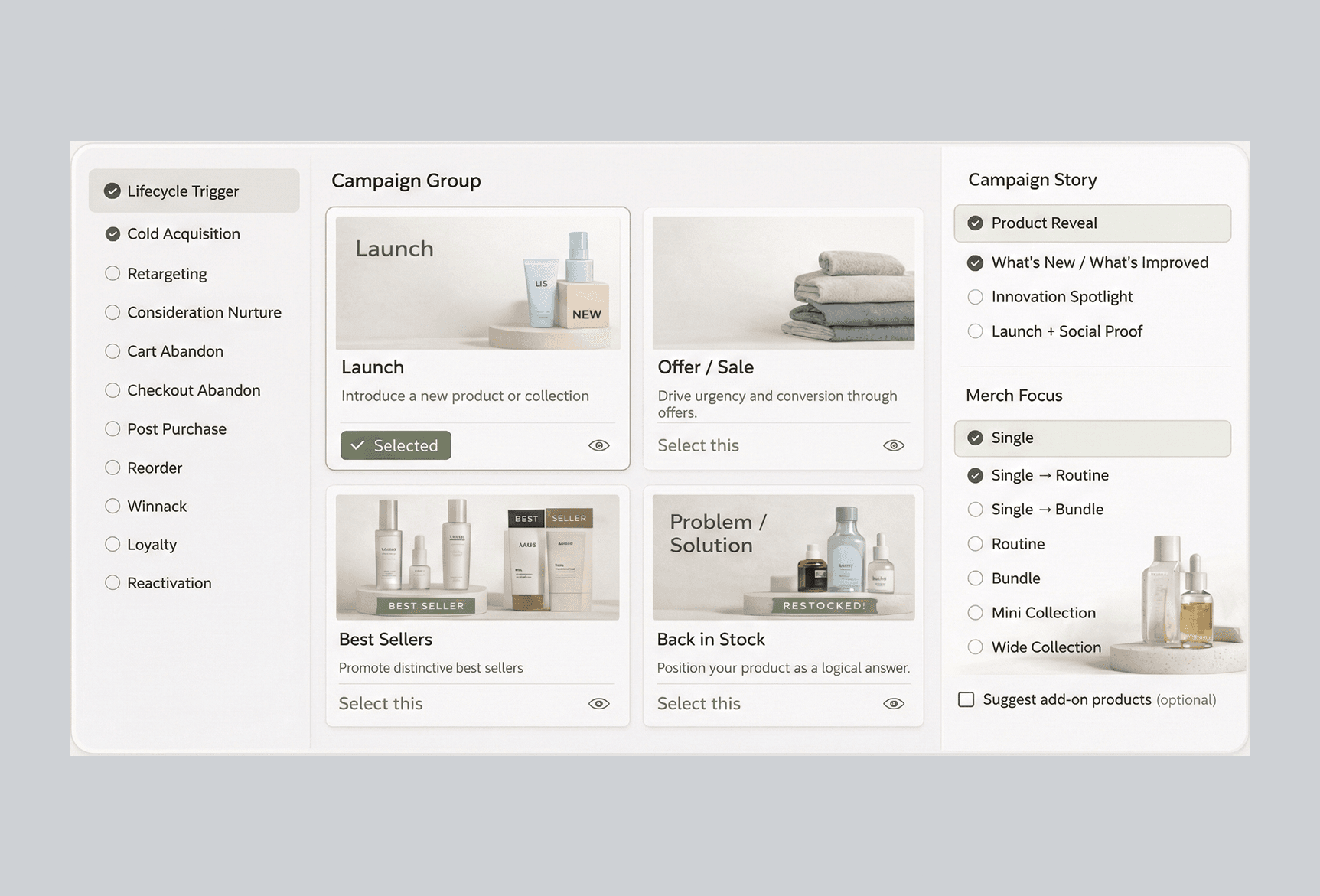
Different customers. Same storefront.
Today, every visitor lands on the same website, regardless of why they came. Paid traffic, returning users, product explorers, and high-intent shoppers all see the same structure. The storefront doesn't reflect intent. It stays fixed, even when the reason to buy changes.
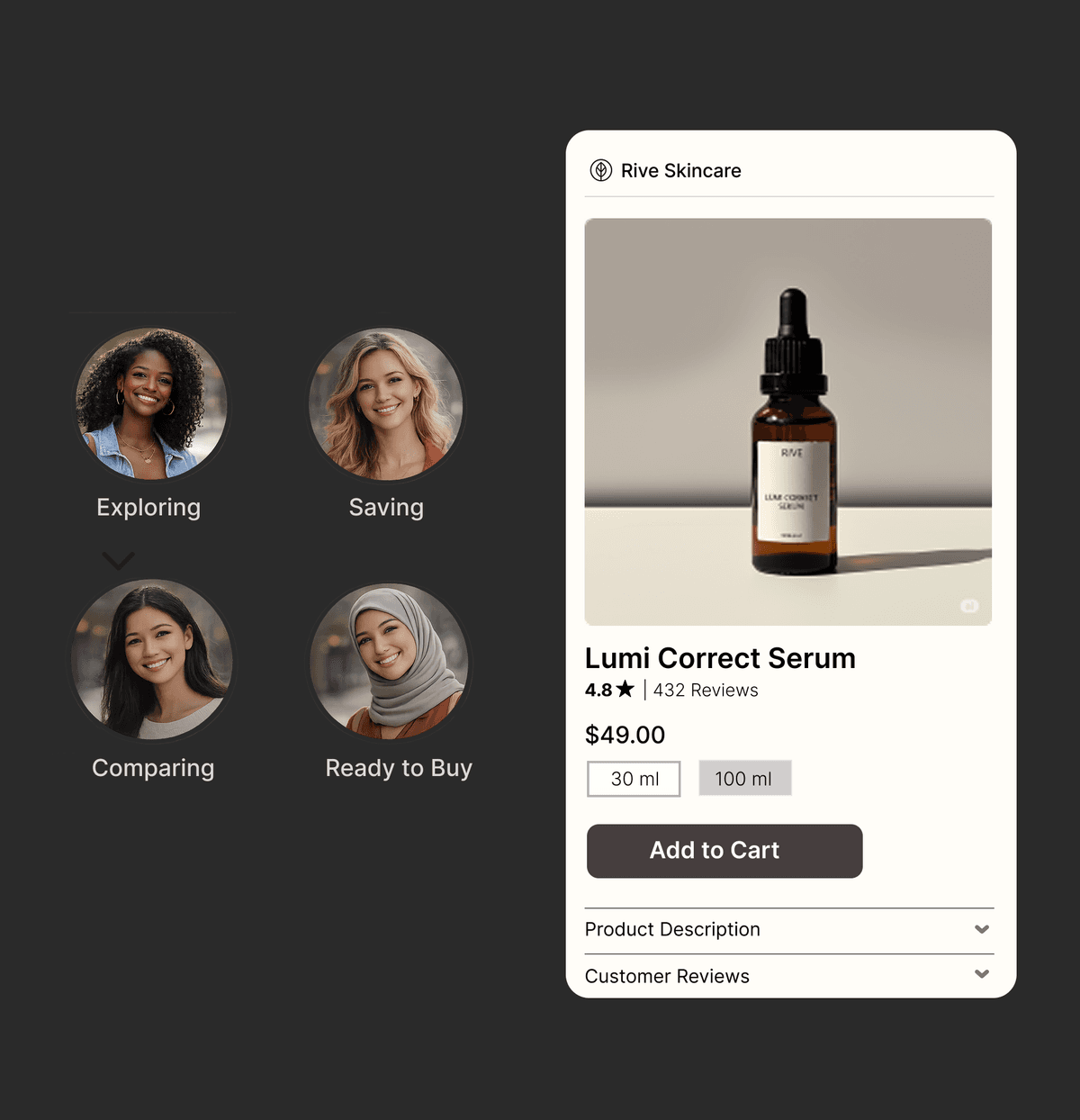
Storefronts built around intent, not a single default experience.
RevWay enables brands to build different storefront experiences based on the selling moment. Instead of forcing one page to serve every visitor, the storefront adapts to how the brand wants to sell.
The catalog stays the same. The way it sells changes.
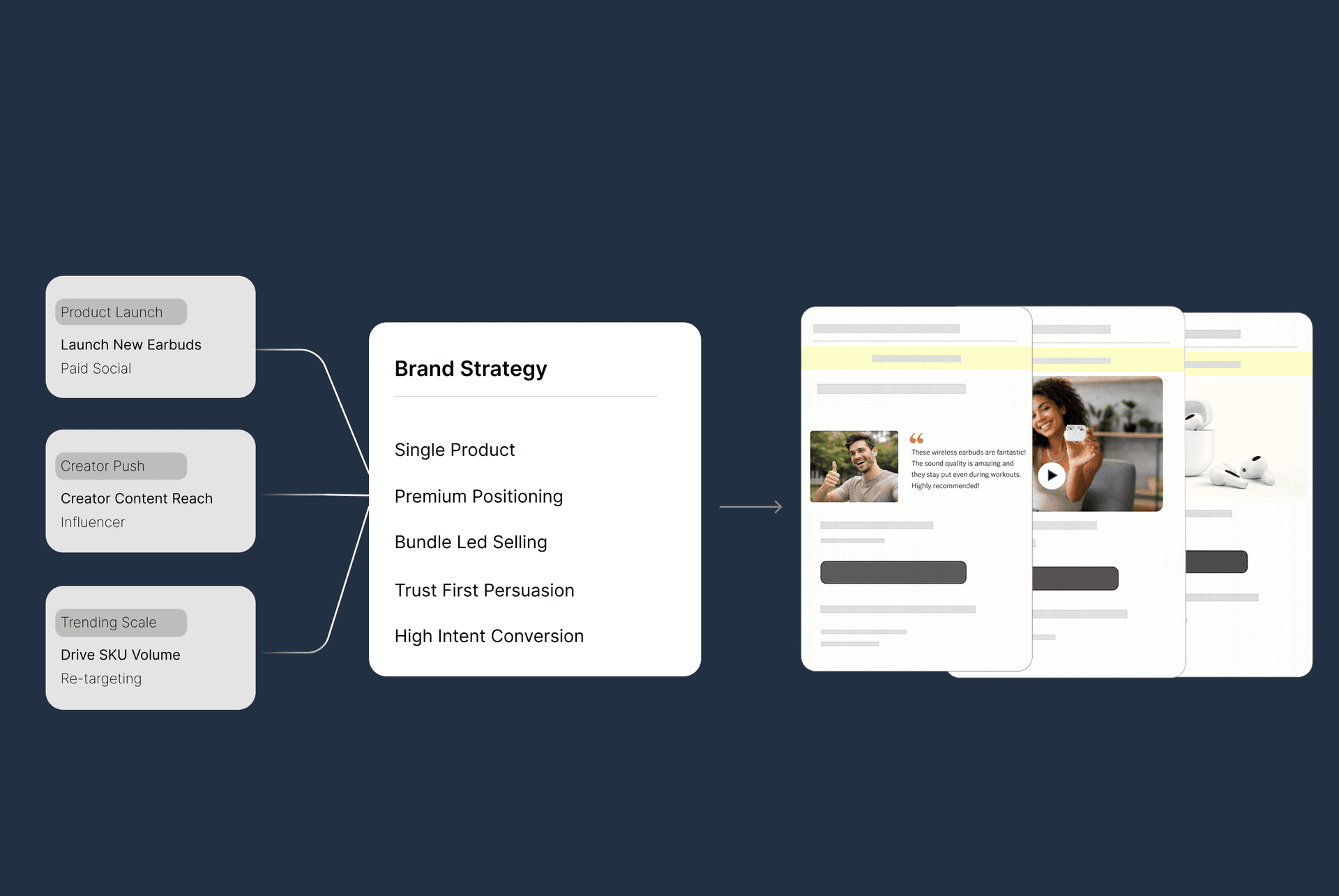
Operate faster. Sell with intent. Scale with consistency.
Experiences aligned to how customers actually buy
Instead of forcing discovery, comparison, and purchase into one page, each storefront is built around a specific buying moment. Customers get the experience that matches their intent.
Faster execution without redesign cycles
Teams can launch new storefronts based on campaigns, audiences, or intent without rebuilding pages or waiting on redesigns. Selling evolves at the pace of marketing, not website releases.
Consistency without page duplication
Teams reuse selling patterns instead of copying pages. The structure stays consistent even as products, campaigns, and messaging change.
Learning that compounds over time
Winning storefronts don't disappear after campaigns end. They become repeatable selling models that can be reused, refined, and scaled across the business.