From static collections to drop-led selling systems
Buying Moment
Release / trend / occasion
Structural Unlock
Ability to create and test multiple drop storefronts across campaigns and launches
Outcome
Drops became structured, repeatable selling moments instead of one-off events
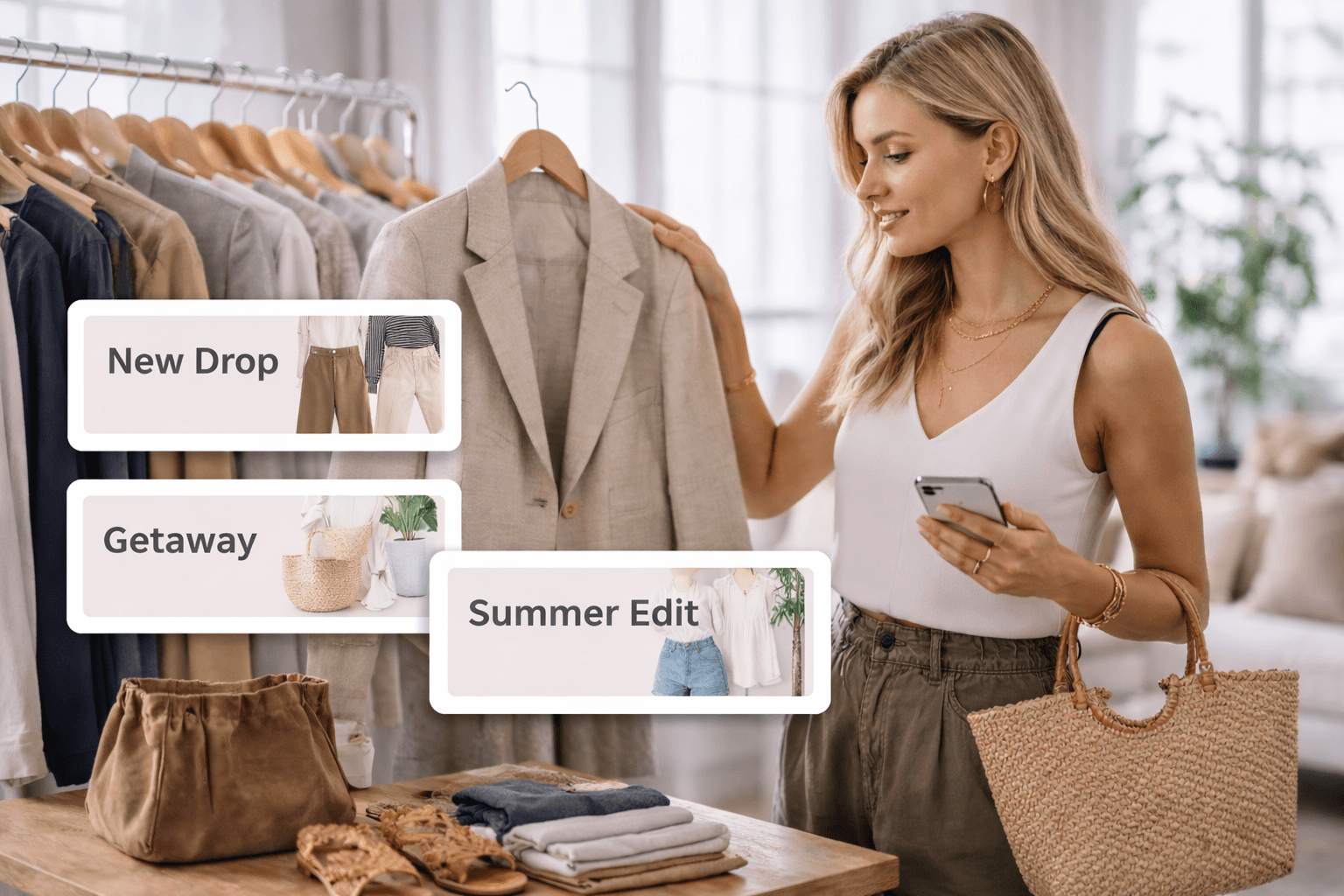
The structural mismatch
Collaborations, seasonal launches, and capsule drops created attention and urgency. Campaigns framed each drop as a moment. But the storefront didn't reflect that. Each launch required manual merchandising and temporary adjustments, with no dedicated selling environment for the drop itself.
The brand was creating launch moments everywhere, except where buying happened.
Changing the unit of selling
The team did not treat this as a content or collection problem. Collections were not redesigned, and no additional campaign pages were introduced. The catalog remained exactly the same. What changed was the selling logic.
Launch became the entry point to the storefront, while products were repositioned as part of that launch. The experience began with the drop moment and unfolded into a curated buying path.
This was not a visual change but a structural one: a shift in how decisions were organized rather than how collections were arranged.
Collections stayed the same.The selling logic changed.
Launch became operational
The brand introduced launch storefronts structured around key moments:
- seasonal drops
- collaborations
- influencer capsules
- trend releases
Each launch storefront opened with the drop narrative, grouped products within the launch, highlighted hero pieces, and concluded with a focused CTA. Campaign traffic began landing directly into launches instead of collections.
Execution became repeatable:
- define the launch moment
- duplicate a base launch structure
- update products and narrative
- launch
What previously required collection reshuffling became duplication and iteration. Launches shifted from one-off campaign events to a scalable merchandising layer.
What changed
- The brand could run more drops and collaborations without restructuring the site
- Campaigns launched into dedicated selling environments
- Merchandising shifted from collection reshuffling → launch orchestration
- Execution moved from one-off setup → repeatable rollout
Buying shifted from browsing collections to entering launch moments.
The real breakthrough
The breakthrough wasn't new collections or better campaign pages. It was the ability to generate multiple launch storefronts dynamically based on the moment: seasonal drops, collaborations, influencer capsules, or trend releases.
Launches stopped being events.They became a system the brand could create, adapt, and run repeatedly.
Key Takeaways
Launch became the primary selling unit, not collections or PDPs
Campaigns could land into dedicated drop environments
Merchandising shifted from manual reshuffling to launch orchestration
New drops and collaborations could be launched without restructuring the site
Selling evolved from catalog browsing to moment-led buying